Financial writing
Financial writing for investing, personal finance, and wealth management.
I’m a freelance financial writer with six years of financial services experience turning subject knowledge, research and conversations into content people trust and use. Articles, guides and reports, doing the job you need content to do.
I write all original material myself. But separately, I help marketing teams use AI for efficient content workflows where there are repeat formats, with clear limits and editorial checks.
Who I work with
Marketing teams and agencies.
Readers: retail investors and traders, private clients, institutional investors, investment managers and financial advisers, and more.
What I write
Experience in multiple formats – long-form and short-form.
1,000+ written
Articles & explainers
Articles to pounce on trending questions your audience is searching, and meet PR opportunities with thought leadership.
Signature work
Guides & brochureware
Longer pieces that make you proud to share and proud to have sitting on your coffee table at home.
Web & product copy
Service pages and landing pages written with the user journey in mind. Web copy that engages and converts effectively.
Market commentaries
Your periodic commentary on equities, bonds and EMs, with your firm’s expertise and voice instilling trust in clients.
Reports & white papers
Research and technical info should come alive in storytelling: why they matter and what the reader should do next.
Email & social copy
Supporting email and social copy for publishing other content. Written to be persuasive, not come across generically.
Selected writing · four projects
Four examples of major works written from scratch.
These projects show the writing, the thinking behind it and my part in the work.
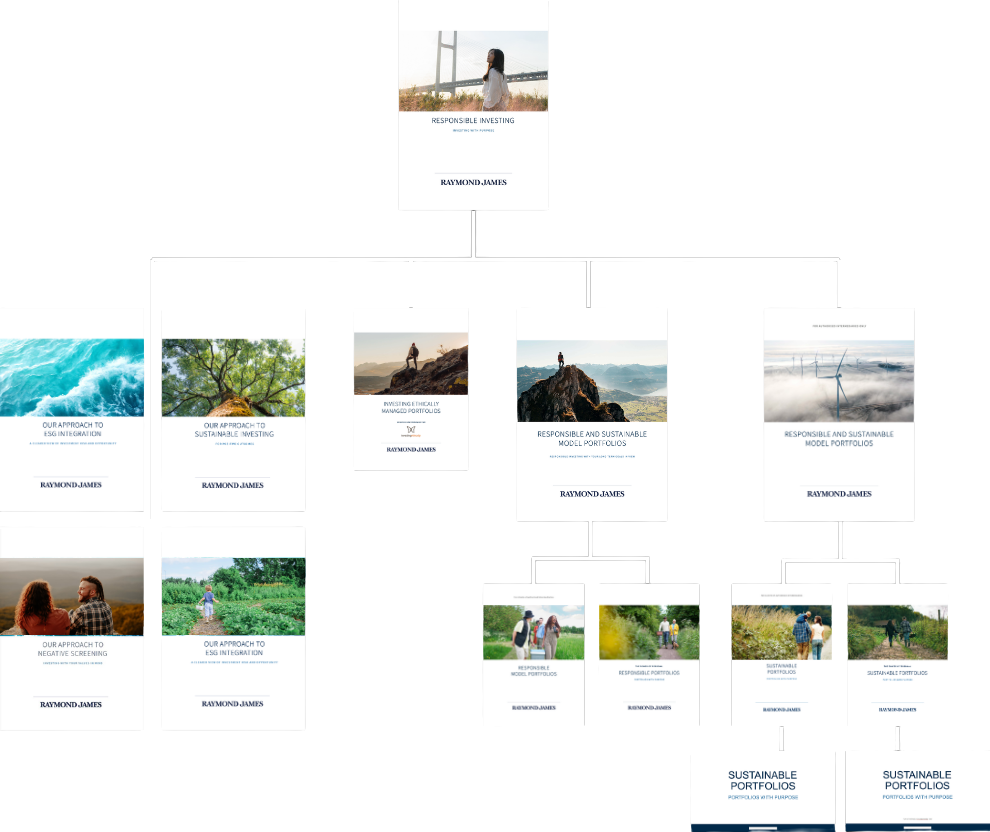
Raymond James Wealth Management
A responsible investment content suite
Working with the Head of Responsible Investment, I developed a 16-strong brochure and presentation suite for private clients and advisers. The writing explained a layered proposition with consistent accuracy across multiple different audiences.

Charles Stanley / Raymond James
Financial planning in four life stages guides
I led the development and writing of four financial planning guides, working with four planners and four investment managers. The guides and supporting web pages connected CS/RJ’s services to the decisions clients face as life moves on.
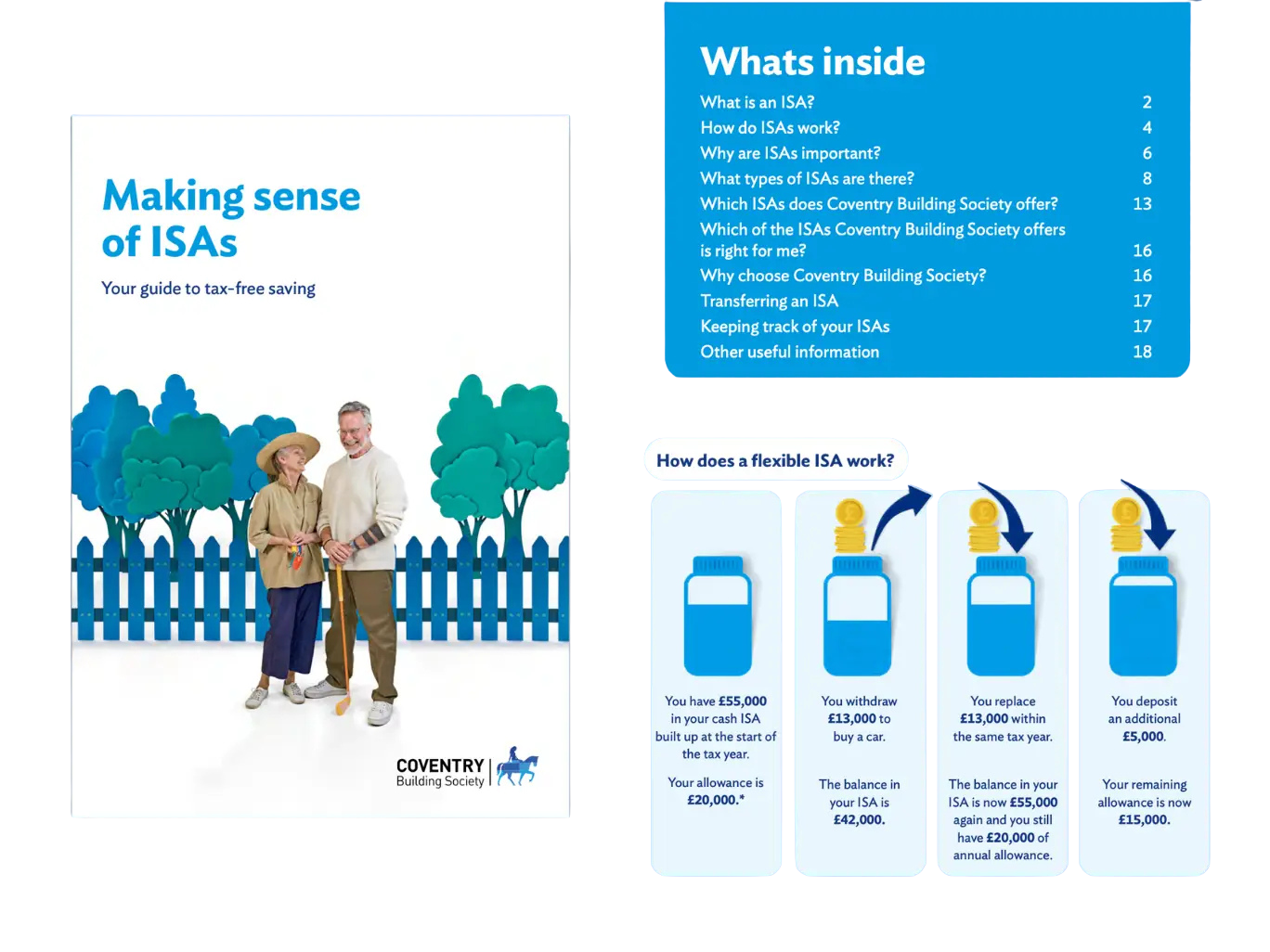
Coventry Building Society
Savings and mortgages in plain English
I wrote articles and guides for CBS’s member Knowledge Centre and Coventry for Intermediaries. No jargon. Kept simple in the building society’s distinctive voice. Content is handled very differently for an everyday audience than it is for brokers.
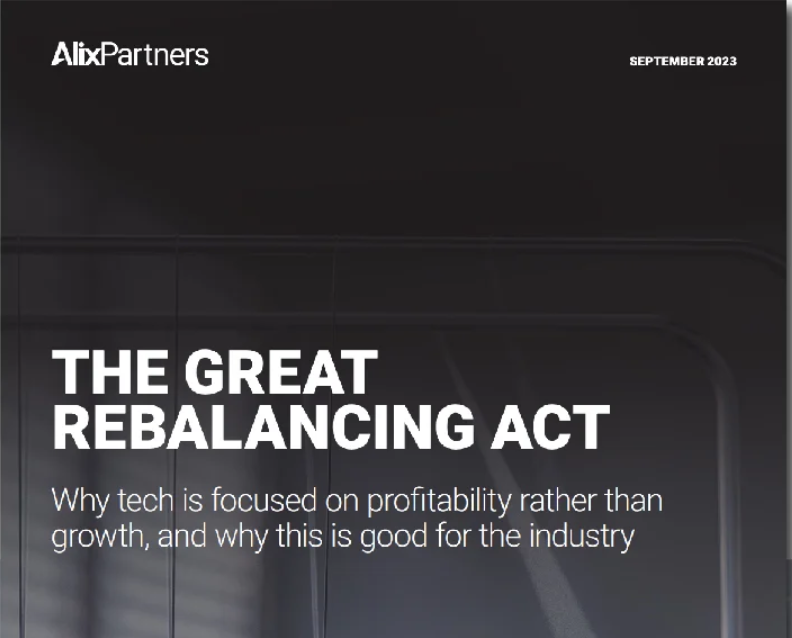
AlixPartners · through Rostrum
Research with a story to tell
Working alongside AlixPartners’ writing team through agency Rostrum, I co-wrote sections of a technology sector research report, including its web landing page. My part was to make the findings and their implications easier to follow.
For more market and investing writing, explore the writing samples on My Work.
Three specialisms
There are three main subject areas my content usually fits into.
01
Personal investing and trading
Content for people making their own investing or trading decisions, including users of execution-only platforms like Robinhood, Interactive Brokers or Nutmeg. Market explainers, educational pieces, platform announcements, and more, all sit here.
You have to be very mindful of the risks and limitations from a regulatory point of view when talking to a DIY audience. I’ve supported Invstr and Charles Stanley Direct to forge communities around platforms and equip them with valuable resources.
02
Wealth management
Financial planning and investment content for private clients, prospective clients and advisers/intermediaries. Market commentaries, life-stage guides, AIM IHT guides, responsible investment material, factsheets, RFPs and more sit here.
Most wealth managers speak in a similar tone and say similar things, so I love the creative challenge of delivering content that catches the eye and connects to the reader’s real emotions and behaviours, ultimately driving an adviser/IM conversation.
03
Personal finance
Savings, ISAs, mortgages, buying a home and the everyday decisions that sit around these topics. Practical content for people who may not feel confident about money, as well as different versions for brokers and intermediaries.
Who I write for
The audience comes first.
I consider what the reader already knows and what they need to do next.
B2C · Investing
DIY investors
People choosing a platform, opening an ISA or trying to understand deeper equity research to find investment opportunities. Some are starting out (acquisition); others have years of experience but are new or returning to a particular product (reactivation).
What works: Layered explainers, worked examples and comparisons that make costs, access and risk easy to follow.
B2C · Trading
Active traders
Readers interested in market moves, trading tools and how a product works in practice. Familiarity with the scene does not necessarily mean they understand every risk.
What works: Product mechanics walkthroughs, market commentary and examples of how orders and leverage work.
B2C · Wealth
Private wealth clients
People making decisions about retirement, inheritance, family wealth or their investment arrangements. The advice needs a clear connection to what is happening in their lives.
What works: Worked examples, case studies, life-stage guides, planning explainers and clear proof of a firm’s personal approach.
B2C · Personal finance
Savers and borrowers
People comparing savings options, managing an ISA, buying a home or approaching a remortgage. Their confidence, familiarity with the process and immediate concerns will vary.
What works: Practical guides, step-by-step explanations and answers organised around the questions people actually have. Make eligibility, conditions and costs easy to find.
B2B · Intermediaries
Advisers and intermediaries
Financial advisers, planners and mortgage brokers need to know what they can say in their work. They may know the subject well but need precise detail about the firm’s proposition, with leave-behind material.
What works: Leave-behind guides, proposition material, criteria explainers and content that supports client conversations.
B2B · Institutions
Institutional and specialist readers
Investment managers and other financial professionals need the argument, evidence and implications. They can recognise when a simplification has removed a key distinction.
What works: Research reports, event content, technical literature, market commentary and informed thought leadership.
The same collateral often needs different versions, but expert use of AI can assist here.
The responsible investment suite for Raymond James Wealth Management needed explanations for various groups of private clients and advisers. My Coventry articles also covered both B2C and B2B audiences.
FCA & regulatory considerations
The FCA’s Consumer Duty, and other rules in financial writing.
I consider regulatory requirements as the content takes shape. I need to consider what a claim says and what qualifies that claim.
At the start of the brief
Establish the intended readers and their level of sophistication. Product and market. Purpose and channel. Agreed fin prom responsibilities.
The points below show how I factor in compliance to content writing.
Investing and tradingExplain the relevant risks. Check the requirements for the product.
A mainstream investment and a leveraged trading product need different treatment. The FCA does not prescribe a single risk phrase for mainstream investments; relevant CFD promotions have specific requirements for warning wording and presentation.
In the writing: I explain the product’s mechanics, costs and potential losses alongside its uses. I work from the firm’s current product information and required disclosures, including its applicable loss percentage where required. I check that shortening a passage has not made a conditional benefit sound certain.
FCA: mainstream investment risk warnings · COBS 22.5: CFDs and similar products
Savings, mortgages and tax-related contentKeep the conditions beside the claim.
A headline rate or a tax benefit can become misleading when its conditions fall out of the explanation. Savings and mortgage communications have their own relevant rules, and the detail needs checking against the actual product and current sources.
In the writing: I look for eligibility, access restrictions, fees, time limits and what happens when an offer ends. For tax-related material, I check the tax year and the assumptions behind an example, flag points that depend on personal circumstances, and distinguish confirmed rules from proposals.
BCOBS 2.2: banking communications · MCOB 3A.2: mortgage communications
Market commentary and performanceMake the evidence, timeframe and uncertainty clear.
A strong period of returns, a forecast and a simulated result tell different stories. The source, dates, calculation basis and selection of comparisons all affect the impression a reader takes away. The applicable performance rules depend on the business and communication.
In the writing: I distinguish historical results from scenarios and forecasts; check periods, currencies, costs and assumptions; and query comparisons that need more context. Required warnings stay prominent. An investment view should remain recognisable as a view, with the uncertainty intact.
COBS 4: communicating with clients · COBS 4.6: non-MiFID performance provisions
Responsible investing and sustainabilityBe precise about what the strategy actually does.
Sustainability claims need to reflect the product and be supported by evidence. Under the FCA’s anti-greenwashing guidance, a broad statement can mislead if it overstates the approach or leaves out significant qualifications.
In the writing: I distinguish integration of environmental, social and governance factors, exclusions, stewardship and sustainability objectives. I check the policy, portfolio coverage and thresholds behind a claim, explain unfamiliar terms and keep limits visible. “Considers” should not become “guarantees” during an edit.
FCA: anti-greenwashing guidance (PDF) · See the responsible-investment project
Retail and professional audiencesMatch the explanation to the intended recipient and distribution.
The FCA takes the nature of the client and the communication into account. A B2B label or substantial personal wealth does not by itself establish professional-client status. I confirm the intended readership and any distribution limits in the brief.
In the writing: I adjust the assumed knowledge, terminology and supporting explanation. I also ask whether an adviser-facing piece will be passed to clients or adapted for a public website: a change in readership may require a fresh version and review.
COBS 4.2: the nature of the client · COBS 3.5: professional clients
Consumer understanding and accessibilityConsider what people can understand and use.
Where Consumer Duty applies, the communication needs to support understanding. Financial confidence, numeracy, accessibility needs and circumstances can affect how someone uses the information. A readability score alone cannot establish that the reader has understood it.
In the writing: I use clear sequencing, concrete examples and visible conditions. Where your team has customer research, recurring questions or testing feedback, I can use it to revise the wording and structure. The aim is to help people find what matters and understand the decision in front of them.
Email, social and shorter formatsPreserve the balance when the space gets smaller.
Where a piece is a financial promotion, the FCA expects it to meet the applicable rules in its own right. A link to a longer page does not repair a misleading impression in the shorter version. The channel also affects how easily information can be seen.
In the writing: I plan the claim and its qualifications together, then consider mobile layouts, captions, truncation and any required warning. If a format cannot carry the necessary explanation, I flag that for review before the copy is adapted further.
AI in financial content
Make full use of AI but keep editorial control and accountability.
I help teams use AI in financial content, drawing on my work at Amazon AGI.
“What did you do at Amazon?”
As an AI Associate in Amazon’s AGI team, I helped improve the model’s responses to questions about personal finance and investing. I brought financial subject knowledge to refining those answers. That experience now informs how I assess AI output and help clients use it.
Start with good sources
I write the original material and organise agreed sources for AI-assisted adaptations.
Protect the meaning
Claims, figures, caveats and tone need a proper editorial check.
Keep people in control
Agreed tools, clear review responsibilities and human approval.
For regulated firms, existing FCA obligations still apply when using AI.
Questions
Before you brief a financial writer.
A few practical answers. If your project does not fit neatly into these, just ask.
What kind of financial writing do you specialise in?
My three main areas are DIY/personal investing and trading, wealth management, and personal finance. I have also written for law firms on private equity, private equity investee stories, factsheets, and led specialised projects in the area of responsible investment.
Can you write for execution-only investing and trading platforms?
Yes. This is where my career began. I have experience writing equity research educational articles, market explainers, product and platform content for people making their own investing or trading decisions. However, investing and trading are not interchangeable audiences.
Do you use AI to write the content?
I write the original material myself. Separately, I help teams use AI in agreed workflows. AI can make content much more efficient with the right accountability over accuracy, compliance, performance. You should never have to guess how your copy was produced.
Can you help with FCA-related content requirements?
Yes. I have always written within Consumer Duty rules. I can support clear, evidence-led writing and work with your compliance reviewers. That includes disclaimers, risk wording, caveats and the intended audience. I do not provide legal advice or approve financial promotions. Regulatory judgements and sign-off remain with the firm and its appointed reviewers.
Can you work from interviews with our experts?
Yes. I can research the subject if it’s a a niche one I am unfamiliar with, prepare questions, lead the interviews and develop an outline before writing in their voice. This is useful when the expertise exists in the business but staff don’t have time to turn it into finished content themselves.
Do you work with agencies as well as in-house teams?
Yes. I have worked in-house, in agencies and as a freelancer.
Can the content be written with Google and AI search in mind?
Yes. SEO, AEO and GEO are intrinsic to strong-performing content. With experience at Amazon AGI, I helped to increase Raymond James Wealth Management’s AI visibility of content in ChatGPT and Copilot by +83% month-on-month.
How do you price a project, and how long will it take?
Please send me the subject, formats, approximate scope and deadline. We will agree the fee and schedule. My Work includes indicative rates; but the final quote depends on the brief.
Already have a draft or a content series to manage?
Have a project in mind?
Tell me what your content needs to do.
Send me the subject, the audience and what you are trying to achieve. We can work out the right scope from there.
